
Quick answer
Choose a low-entry stroller with a stable frame, secure enclosure, airflow, and enough interior room for the dog to sit and turn. A detachable carrier is valuable if you will lift the dog into a car or clinic. Do not use a stroller as a car restraint, and ask a veterinarian about new weakness, pain, or balance changes.
What matters most
- Strollers support mobility; they do not diagnose or treat it.
- Low entry and a stable floor are the main daily-use features.
- Check the dog's weight and standing height, not only breed.
- Use the stroller only under supervision.
When a stroller can genuinely help
A stroller may help a small dog who tires quickly on a long walk, needs a protected place during a busy outdoor event, or is recovering from a normal activity limitation under veterinary guidance. It can also let an older pet remain part of a family outing without being carried awkwardly.
It is not a replacement for evaluating new pain, weakness, breathing difficulty, or collapse. Those changes need veterinary attention. If the dog resists the stroller or becomes distressed, do not force the experience.
Fit the dog before choosing the color
Measure the dog standing and lying down. Check the usable interior width, ceiling height, and door opening. A small dog should be able to settle naturally rather than brace against the sides. Confirm the current weight limit and account for the carrier or stroller itself when lifting.
A low step matters for an older dog, but it should not come at the cost of a flimsy frame. Test the brakes and check that the pet compartment stays stable when the handle is lifted or the stroller is stationary.
Introduce it slowly
- Set the stroller up indoors with the pet compartment open.
- Let the dog investigate and place a familiar blanket inside.
- Close the compartment only for a few calm seconds while the stroller is still.
- Try a short, level route with another person helping if needed.
- Keep the dog supervised and avoid stairs, traffic edges, and rough terrain at first.
Use the brake whenever you stop, keep the handle under control, and never leave the dog inside unattended—even for a short errand.
Do not confuse a stroller with a car seat
A stroller frame is designed for walking. It is not a crash-tested vehicle restraint and should not be used as one. If the outing includes a car, use a suitable carrier or restraint system for that portion, then move the dog into the stroller only when parked.
A detachable carrier can make that transfer easier, but it still needs to be secured correctly in the vehicle according to its own instructions.
Plan the route around the dog, not the stroller
Choose a familiar, level route for the first outing. Avoid busy crossings, narrow store aisles, and uneven pavement while the dog learns how the stroller sounds and moves. Plan shade and rest stops; the stroller itself does not cool the pet.
Keep the dog secured inside and use the brake whenever the stroller stops. In warm weather, test the interior temperature before placing the pet inside and avoid leaving the stroller in direct sun. If the route requires stairs or a crowded vehicle, a simpler carrier may be easier and safer for the day.
Our product picks for this job
Prices below are refreshed from the Amazon product feed when the page loads. Confirm the selected size, color, seller, and final price on the listing. Shopping links may earn PawGearVerified a commission at no extra cost to you.
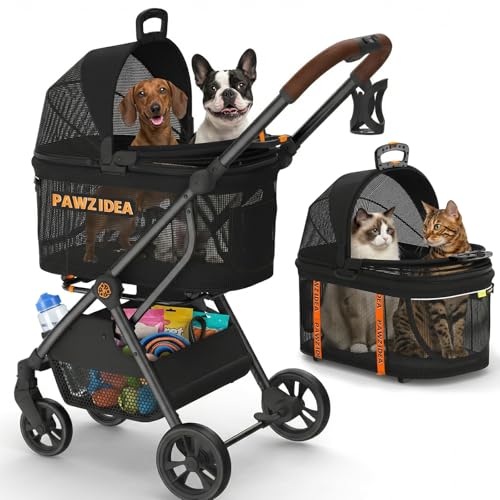
PAWZIDEA 4-in-1 Pet Stroller with Detachable Carrier
The removable carrier and mesh enclosure make it useful for a walk, a short transfer, or an indoor resting stop. Check the dog's standing height and the full folded footprint.
Amazon listed price
$169.99
At last check October 23, 2026
Common questions
Are pet strollers good for senior dogs?
They can help a small or easily tired dog join a calm outing, provided the stroller fits and the dog accepts it. They are not a substitute for veterinary assessment of new weakness or pain.
Can a dog sleep in a stroller?
A dog can rest inside while you are actively supervising it, but it should not be left enclosed and unattended. Check airflow and use the brake whenever you stop.
Is a pet stroller safe in a car?
A stroller is not a crash-tested car restraint. Use a suitable vehicle restraint or carrier for travel, then move the pet into the stroller when you arrive.
Research sources
We combine manufacturer specifications and instructions with established pet-care guidance and recurring themes in public owner feedback. We do not claim hands-on testing for every unit.
- Traveling with pets — AVMA
- Product safety instructions — PAWZIDEA

Practical pet-hardware research for U.S. cat and dog owners. Product fit and safety depend on the individual pet, home, and current manufacturer instructions.